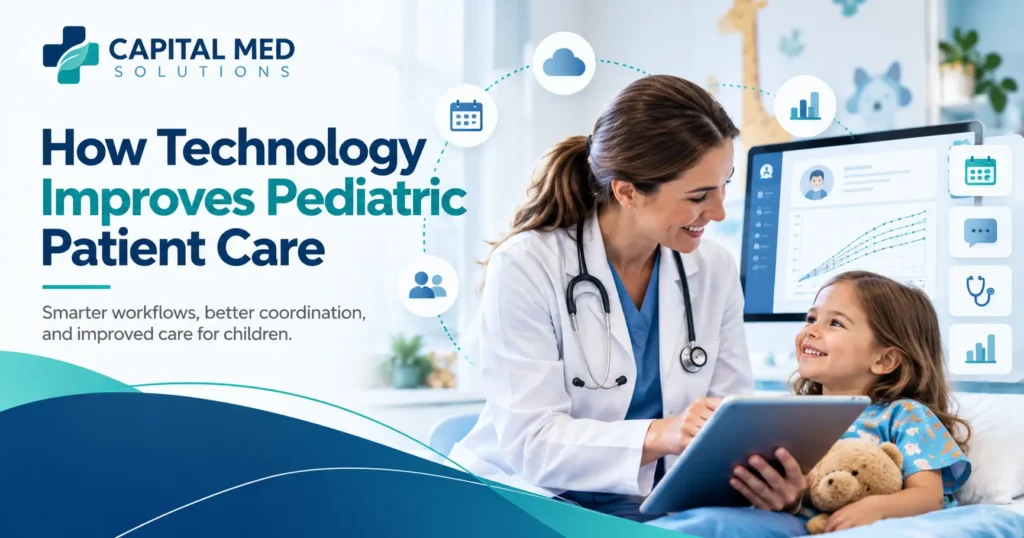
How Technology Improves Pediatric Patient Care
Providing quality pediatric care involves more than diagnosing and treating childhood illnesses. From monitoring growth and development to managing immunizations, medical records, and follow-up visits, pediatric healthcare providers must coordinate multiple aspects of a child’s health.
Modern healthcare technology helps pediatric practices organize patient information, simplify clinical workflows, and improve communication with families. Digital tools such as electronic health records, telehealth platforms, and patient portals make healthcare information more accessible while supporting timely treatment decisions.
By integrating technology into daily operations, pediatricians can reduce administrative responsibilities, improve care coordination, and spend more time focusing on children’s health and well-being.
Why Pediatric Practices Need Modern Healthcare Technology
Pediatric clinics manage patients with changing healthcare needs throughout childhood and adolescence. Tracking preventive visits, immunization histories, developmental milestones, and ongoing medical conditions requires accurate information and organized workflows.
Modern pediatric healthcare technology helps practices:
With the right digital systems, pediatric providers can access relevant patient information more efficiently and deliver coordinated, age-appropriate healthcare.
Improve Pediatric Documentation and Record Keeping
Accurate medical documentation is essential for safe pediatric treatment. Children’s healthcare records must reflect changing growth patterns, medical histories, allergies, medications, and developmental needs.
Pediatric electronic health records help providers organize:
According to the American Academy of Pediatrics, health information technology should support the unique clinical requirements of pediatric patients.
Digital documentation makes records easier to retrieve, supports continuity of care, and helps providers make informed clinical decisions.
Streamline Pediatric Scheduling and Care Coordination
Managing pediatric appointments can be challenging when clinics handle routine checkups, sick visits, developmental assessments, and ongoing treatment plans. Scheduling errors and delayed communication can disrupt the patient experience.
Digital scheduling and care coordination tools help practices improve:
Telehealth platforms can also support selected consultations and follow-up appointments when an in-person examination is unnecessary.
Better coordination helps healthcare teams maintain continuity of care while making appointments more convenient for children and their families.
Strengthen Preventive Care and Health Monitoring
Preventive healthcare plays an important role in identifying potential health concerns early. Pediatric providers must regularly assess physical development, vaccination status, and age-appropriate health needs.
Technology supports preventive pediatric care through:
The Centers for Disease Control and Prevention explains that immunization information systems help healthcare providers access vaccination histories and identify recommended immunizations.
These tools support timely follow-up, improve access to preventive care information, and help providers monitor children’s health over time.
Improve Family Communication and Engagement
Clear communication between pediatricians and families is essential for effective patient care. Parents and caregivers need reliable information about appointments, treatment instructions, test results, and ongoing health concerns.
Digital healthcare platforms may offer:
Patient portals allow authorized families to review healthcare information and communicate with their child’s medical team.
Appropriate privacy safeguards are particularly important for adolescent patients, whose confidentiality rights can differ depending on applicable laws and the services provided.
Use Pediatric Health Data to Make Better Decisions
Healthcare technology allows pediatric practices to review clinical and operational information that can help identify gaps in patient care.
Electronic systems may provide insights into:
These insights help healthcare teams identify patients who may require additional attention and evaluate opportunities to improve practice workflows.
Clinical decisions should still be based on professional judgment, accurate patient information, and appropriate medical guidelines.
Reduce Administrative Workload With the Right Support
Although technology simplifies many healthcare processes, pediatric practices still manage insurance verification, medical billing, patient documentation, and other administrative responsibilities.
Combining digital tools with experienced healthcare support professionals can help practices improve operational efficiency and reduce avoidable administrative delays.
Professional support can assist with:
An organized administrative workflow allows pediatricians and clinical staff to dedicate more attention to patient needs.
How Capital Med Solutions Helps Pediatric Practices Improve Operations
At Capital Med Solutions, we support pediatric healthcare practices with medical billing, claim management, and revenue cycle services designed to simplify administrative operations.
Our pediatric medical billing services help practices manage insurance verification, claim submissions, payment posting, and denial follow-up while supporting accurate financial workflows.
By combining organized healthcare technology with professional billing expertise, pediatric practices can reduce administrative challenges, maintain more consistent revenue processes, and focus on delivering quality patient care.
Conclusion
Technology in pediatric patient care supports more organized clinical records, preventive health monitoring, appointment coordination, and communication between healthcare providers and families.
From electronic health records and telehealth to immunization tracking and patient portals, digital healthcare solutions help pediatric practices manage important information and improve daily workflows.
When combined with effective administrative systems and professional support, healthcare technology can help pediatric providers create a more efficient, coordinated, and patient-centered environment.
Need Help Improving Your Pediatric Practice Efficiency?
Simplify your pediatric practice operations with reliable medical billing support, accurate claim processing, and customized revenue cycle solutions designed to reduce administrative challenges and support better patient care.